Demystifying Your Dryer: Vent Cleaning vs. Routine Maintenance
Understand the crucial differences between dryer vent cleaning and general dryer maintenance to keep your home safe and your appliance running efficiently.
Many homeowners rely on their clothes dryers daily without giving the machine much thought until a problem arises. When clothes come out damp or the machine acts up, people often use the terms “dryer maintenance” and “dryer vent cleaning” interchangeably. However, these are entirely different services. Understanding the distinction between the two is vital for protecting your home from fire hazards and ensuring your appliance lasts for years.
Understanding General Dryer Maintenance
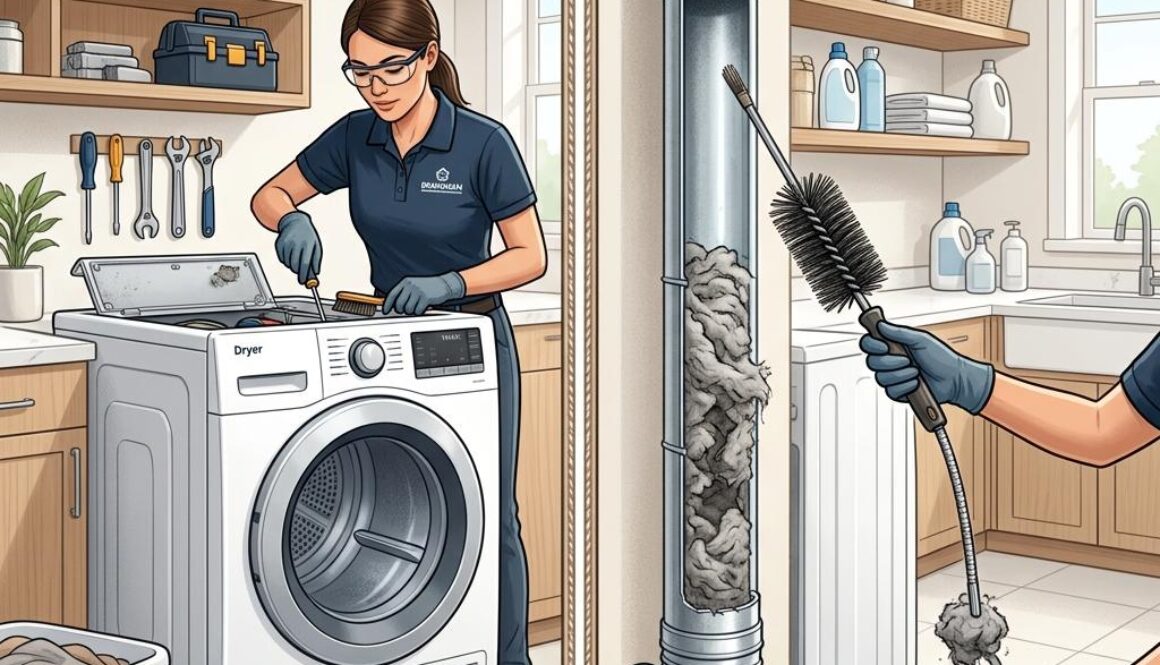
Dryer maintenance focuses directly on the appliance itself. This service involves inspecting, repairing, and tuning up the mechanical and electrical components inside the machine. A technician performing maintenance will look at parts like the drive belt, motor, rollers, internal lint trap, and heating element.
This service matters because it keeps the actual machine functioning smoothly and prevents premature breakdowns. For example, if the felt seal around the drum wears out, your clothes might get caught and tear. If the drive belt stretches, the drum will stop spinning entirely. Routine maintenance addresses these wear-and-tear mechanical issues. It ensures the internal components operate with minimal friction and proper electrical safety.
The Specifics of Dryer Vent Cleaning
Dryer vent cleaning focuses completely on the exhaust system that leads from the back of your machine to the outside of your house. Every time you run a load of laundry, small lint particles bypass the lint screen and travel into the exhaust duct. Over time, this lint builds up along the walls of the pipe, restricting airflow.
This service matters primarily for fire prevention and energy efficiency. Lint is highly flammable. When the exhaust tube becomes clogged, the hot air cannot escape properly, causing the system to overheat and potentially ignite the trapped lint. A practical example of this problem is a vent hose that bends sharply behind the machine, trapping a heavy block of lint that completely cuts off the exhaust flow. Removing this dangerous buildup requires specialized brushes and vacuums that reach deep into the ductwork.
Why Confusing the Two Causes Problems
Mixing up these two services can lead to severe safety, efficiency, and performance issues. If you assume a mechanical tune-up includes duct clearing, you might leave a severe fire hazard sitting inside your walls. Conversely, if you hire someone to clean the ductwork when the machine actually has a failing heating element, you will waste money on the wrong service and your clothes will remain wet.
Failing to clean the vent also forces the dryer to work twice as hard to push air out. This extreme strain directly causes the mechanical parts to overheat and break down faster. Ignoring the exhaust system will ultimately create the need for expensive mechanical maintenance.
Recognizing the Warning Signs
Knowing which service you need comes down to observing how the appliance behaves. You will want to look for specific signs that point to either a mechanical issue or an airflow problem.
Signs you need dryer vent cleaning:
- Your clothes take more than one cycle to dry completely.
- The laundry room becomes unusually hot and humid while the machine runs.
- The top of the machine feels extremely hot to the touch.
- You notice a faint burning smell during operation.
- The exhaust flap on the outside of your house barely opens when the machine is running.
Signs you need dryer maintenance:
- The machine makes loud squeaking, grinding, or thumping noises.
- The control panel displays specific error codes.
- The drum fails to spin even though the motor hums.
- The machine simply will not turn on.
Book a service today to keep your home safe and your dryer running
Keeping your laundry routine safe and efficient requires attention to both the appliance and its exhaust system. Dryer maintenance protects the mechanical life of your machine, while vent cleaning protects your home from fire hazards and poor airflow. By recognizing the unique signs for each service, you can take the right action to keep your equipment running perfectly.